Executive Summary
Two landmark diplomatic meetings in early November 2025 — the 3 + 1 Energy Ministerial in Athens (Greece, Cyprus-Greek Cypriot Administration, Israel, United States) and the C5 + 1 Summit in Washington (the U.S. and the five Central Asian republics) — signal a decisive reconfiguration of Eurasian energy and resource routes.
The declared aim is to diversify energy and mineral supply chains away from Russia (and secondarily China), enhance Europe’s energy security, and cement U.S. influence from the Eastern Mediterranean to Central Asia.
Yet the tone, language, and architecture of these new frameworks also raise a question with strategic implications for Ankara: is Türkiye being quietly left out of the U.S.-backed network of trusted corridors — and if so, what can it do about it?
1. Strategic Context
The geopolitical landscape since Russia’s invasion of Ukraine has revolved increasingly around energy. Europe’s urgent need to wean itself off Russian hydrocarbons opened opportunities for alternative suppliers, while the U.S. re-emerged as a diplomatic convener, using energy and critical minerals as tools of strategic realignment.
Two frameworks embody this shift:
The 3 + 1 mechanism in the Eastern Mediterranean (Greece–Cyprus–Israel + U.S.), originally established in 2019 and now revitalized;
The C5 + 1 format connecting the U.S. with Kazakhstan, Uzbekistan, Turkmenistan, Kyrgyzstan, and Tajikistan.
Both share a clear purpose — building trust-based, non-Russian, and non-Chinese routes for energy and resources, binding local partners closer to Western markets and standards.
The outcomes of these parallel tracks — one focused on gas and energy corridors, the other on critical minerals and rare-earth supply chains — represent the physical and political infrastructure of a post-Russian energy order.
2. The Athens 3 + 1 Energy Ministerial
The Athens meeting brought together the energy ministers of Greece, Cyprus, Israel, and U.S. Assistant Secretary Geoffrey Pyatt. The joint communiqué reiterated their commitment to “further utilize the 3 + 1 framework to promote energy-source diversification and reduce dependence on malign actors.” It also reaffirmed support for “existing and future interconnection projects within the framework of the India–Middle East–Europe Economic Corridor.”
2.1. Key Agreements and Themes
Energy-source diversification: Emphasis on natural gas, LNG, and renewable hydrogen production and transmission through Eastern Mediterranean routes.
Regional infrastructure: Discussion of the “Vertical Gas Corridor” linking Greece, Bulgaria, and Central Europe, and its potential connection to Israeli and Cypriot fields.
Political framing: Condemnation of Russia’s “efforts to circumvent oil sanctions and finance the war in Ukraine,” coupled with references to “malign actors,” implicitly marking a moral and strategic divide between U.S.-aligned states and others.
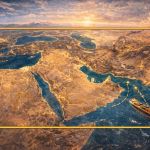
Integration with IMEC: The linking of the Mediterranean corridor to the India–Middle East–Europe Corridor signaled an intent to connect South Asia’s energy flow directly to Europe, bypassing both Türkiye and Russia.
2.2. Strategic Implications
For Greece and Cyprus, the meeting represents a diplomatic windfall. Both states consolidate their status as energy gateways to Europe, attracting U.S. and EU funding for infrastructure and bolstering their geopolitical standing vis-à-vis Ankara.
For Israel, participation opens pathways for exporting offshore gas and potential hydrogen to Europe while cementing strategic relations with the U.S. and EU through a “security of supply” narrative.
For the U.S., the meeting operationalizes its broader objective: establishing an Eastern Mediterranean corridor for energy flow independent of Russia and insulated from Turkish leverage.
3. The C5 + 1 Summit in Washington
The Washington summit of the C5 + 1 framework (U.S., Kazakhstan, Uzbekistan, Turkmenistan, Kyrgyzstan, Tajikistan) focused on the intersection of critical minerals, energy security, and regional connectivity.
President Trump and Secretary of State officials announced memoranda on U.S. investment in Kazakhstan’s and Uzbekistan’s uranium and rare-earth sectors. A fact sheet emphasized “fair and reciprocal economic partnerships, promoting energy resilience, and building transport corridors that bypass Russia.”
3.1. Key Outcomes
Critical Minerals Cooperation: MOUs for U.S. private-sector investment in uranium, tungsten, lithium, and rare-earth processing facilities.
Infrastructure: Support for overland transport routes linking Central Asia to Caspian ports and onward to Europe without transiting Russian territory.
Security and Technology: Agreements on clean-energy technology transfer, grid modernization, and U.S. funding for digital connectivity.
3.2. Regional Impact
For Kazakhstan and Uzbekistan, the deals offer economic diversification and reduced exposure to Russian control over pipelines and mineral exports.
Turkmenistan may benefit through new gas infrastructure access, while Kyrgyzstan and Tajikistan gain smaller but symbolically significant investments in green energy.
Collectively, these developments expand Central Asia’s options beyond the “Russia-China duopoly,” opening space for U.S. strategic return to a region long dominated by the Shanghai Cooperation Organization’s orbit.
4. Reading Between the Lines: Language and Signaling
The specific wording of the Athens and Washington communiqués provides important subtext about inclusion and exclusion.
4.1. The “Malign Actors” Clause
The Athens declaration’s call to reduce “dependence on malign actors” ostensibly refers to Russia. Yet, in the context of Eastern Mediterranean tensions, the phrase resonates differently in Ankara. Türkiye is not named, but its exclusion from the 3 + 1 framework, alongside its disputes with Greece and ‘Cyprus’, implicitly casts it outside the circle of “trusted” states.
4.2. “Bypassing Traditional Routes”
The Washington summit’s emphasis on “bypassing Russian networks” and “creating new corridors to global markets” carries a geographic subtext: new infrastructure plans appear designed to avoid both Russia and Türkiye.
Indeed, none of the press statements or side events referenced Türkiye’s Middle Corridor initiative — a land bridge connecting Central Asia to Europe via the Caspian, Caucasus, and Anatolia. For Ankara, the omission suggests deliberate U.S. preference for Greece- or Caucasus-centered routes.
4.3. “Trusted Partners” and “Peace Through Energy Resilience”
In both meetings, U.S. officials stressed “trusted partnerships” and “energy resilience” as key principles. The repetition of such terminology establishes an implicit trust hierarchy. States that pursue autonomous foreign policies (like Türkiye) risk being portrayed as less reliable — not adversaries, but not full partners either.
This rhetorical framing, though diplomatically couched, contributes to an atmosphere of soft alienation toward Ankara.
5. Regional Impacts: Winners and Losers
5.1. Europe’s Energy Diversification
Europe benefits immediately: the Eastern Mediterranean and Central Asian corridors both expand supply routes and resource sources, reducing vulnerability to Russian manipulation.
In the Mediterranean, LNG terminals in Greece and floating storage facilities in Cyprus are positioned to handle Israeli gas, with potential future integration of hydrogen networks.
In Central Asia, the diversification of mineral supply chains feeds directly into Europe’s green and digital transition agendas, reducing reliance on China’s processing monopoly.
5.2. Russia’s Declining Leverage
For Moscow, these developments mark a further erosion of its regional influence. Alternative pipelines and mineral transport routes blunt its coercive power. Even if Russia maintains bilateral trade with partners like Kazakhstan, the symbolic loss of monopoly influence in Eurasian logistics is profound.
5.3. China’s Strategic Concern
China sees a direct challenge to its Belt and Road presence in Central Asia. The U.S.-backed initiatives threaten Beijing’s control over critical-mineral processing and infrastructure lending. The C5 + 1 framework offers Central Asian capitals an alternative to Chinese funding, one potentially less debt-dependent and more politically balanced.
6. Türkiye: Between Exclusion and Opportunity
6.1. Perceived Marginalization
Türkiye’s absence from both frameworks raises strategic alarms in Ankara. The Athens 3 + 1 effectively institutionalizes an Eastern Mediterranean bloc that excludes it — a notable development given Türkiye’s proximity to all three participants and its centrality in existing pipelines.
Similarly, the U.S. engagement with Central Asia through the C5 + 1 format bypasses the Organization of Turkic States, where Türkiye plays a leading role. In effect, Washington is communicating that it prefers to engage directly with Central Asian governments rather than through Ankara’s umbrella.
This approach can be interpreted as a subtle attempt to dilute Türkiye’s regional influence. The declarations’ phrasing — “new, trusted partners,” “transparent supply chains,” “bypassing traditional routes” — are diplomatically neutral yet strategically suggestive.
6.2. Türkiye’s Strategic Counter-Measures
Despite these headwinds, Türkiye retains formidable leverage — geographic, infrastructural, and political. Its options include:
Reasserting its Transit Centrality:
Türkiye remains the only state bridging the Black Sea, Caucasus, and Mediterranean basins with robust pipeline infrastructure. TANAP and TurkStream, alongside expanding LNG and storage capacity, make it indispensable to Europe’s long-term energy diversification.
Deepening the Middle Corridor:
Through the Baku–Tbilisi–Kars railway and Caspian shipping lines, Türkiye promotes the “Middle Corridor” linking China and Central Asia to Europe via Anatolia. Strengthening this route — logistically and diplomatically — could counterbalance U.S.-backed alternatives.
Leveraging the Organization of Turkic States:
Ankara can use its cultural and political influence to bind Central Asian states into joint logistics and processing ventures, positioning itself as the natural hub for their exports.
Balancing Multi-Vector Diplomacy:
Türkiye’s pragmatic ties with both Moscow and the West provide maneuverability. While this posture occasionally strains NATO relations, it enables Ankara to hedge against exclusion by cultivating simultaneous engagement with Russian, Chinese, and Western corridors.
Developing Renewable and Critical-Mineral Capacities:
By investing in domestic rare-earth extraction (notably borium/boron) and green energy projects, Türkiye could reposition itself from a transit player to a producer and processor within the new supply ecosystem.
6.3. The Risks of Inaction
If Türkiye fails to adapt, several risks loom:
Loss of Transit Relevance: Routes through Greece or the Caucasus could permanently reduce Türkiye’s gas-transit monopoly.
Diminished Leverage in the Eastern Mediterranean: The Athens 3 + 1 framework may evolve into a political bloc that influences EU energy policy and maritime boundaries to Ankara’s detriment.
Erosion of Influence in Central Asia: Direct U.S. and European engagement with Turkic republics could dilute Türkiye’s soft power and its long-term integration plans through the Turkic Council.
7. Broader Geopolitical Implications
7.1. For Europe
Europe gains strategically: the 3 + 1 corridor secures diversified gas imports, and the C5 + 1 channel supplies the minerals needed for energy transition technologies. Together, they support Brussels’ 2040 decarbonization targets while reducing exposure to geopolitical blackmail.
7.2. For the United States
Washington consolidates its return to two critical regions where Russian and Chinese influence had deep roots. The Eastern Mediterranean format strengthens U.S. allies within NATO, while the Central Asian format opens economic pathways long dominated by the Belt and Road Initiative.
7.3. For Russia and China
Both powers see encirclement. Russia loses transit rents and political leverage; China faces competition for resource access and corridor influence. Both are likely to counter through stepped-up bilateral deals, hybrid influence, or renewed pressure on partners to avoid alignment with U.S. frameworks.
7.4. For Türkiye
Türkiye occupies a delicate middle ground: it remains a NATO member, yet its autonomous regional policies (Syria, Libya, defense industry cooperation with Russia) often create friction. The emerging corridors heighten this tension, signaling that Washington and Brussels are willing to design alternative routes if Ankara remains unpredictable.
8. Policy Recommendations for Türkiye
To avoid marginalization, Ankara could adopt a dual strategy of engagement and diversification:
Engagement:
(Although highly unlikely under current term) Seek observer or partner status in the 3 + 1 framework through technical or renewable-energy cooperation.
Propose joint working groups with the C5 + 1 members on transport, digital, and green technologies under the umbrella of the Organization of Turkic States.
Infrastructure Diversification:
Upgrade the Ceyhan terminal and the İzmir and Marmara LNG hubs for flexible re-export capacity.
Integrate the Middle Corridor more tightly with European transport networks (TEN-T).
Diplomatic Synchronization:
Re-emphasize Türkiye’s NATO alignment on energy security, particularly on Black Sea critical infrastructure protection.
Avoid framing itself as a spoiler in Eastern Mediterranean projects; instead, promote “complementary corridors” logic.
Strategic Messaging:
Counter the narrative of “malign actor” through transparent energy cooperation and mediation in regional crises.
Highlight Türkiye’s indispensable geography as a stabilizing rather than disruptive factor.
9. Conclusion: A Crossroads for Eurasian Energy and Türkiye’s Role
The Athens 3 + 1 and Washington C5 + 1 meetings are not isolated events; they are pillars of a new U.S. energy-geopolitical architecture stretching from the Mediterranean to the steppes of Central Asia. Their stated purpose — diversification and resilience — is credible and strategically sound. Yet their design also draws new lines of inclusion and exclusion.
For Greece, Cyprus, and Israel, the outcome is elevation; for Central Asia, autonomy; for Europe, security; and for the U.S., renewed leadership.
For Türkiye, the message is more ambiguous: it is not named as a partner, nor branded as an adversary — but quietly omitted from both frameworks. In diplomacy, omission often speaks louder than condemnation.
Still, Türkiye holds the tools to remain central: unmatched geography, advanced infrastructure, energy-hub experience, and links to both East and West. The choice before Ankara is whether to act as a bridge integrated into the emerging system, or as a bystander watching alternative corridors encircle it.
The next phase of Eurasian energy politics will depend on how quickly Türkiye decides to move — and whether it views exclusion as a setback or as a catalyst for strategic reinvention.